Poetry logo

Poem of the day

Categories

Poetry Hubs

Simple Poetry's mission is to bring the beauty of poetry to everyone, creating a platform where poets can thrive.

Copyright Simple Poetry © 2026 • All Rights Reserved • Made with ♥ by Baptiste Faure.

Shortcuts

  • Poem of the day
  • Categories
  • Search Poetry
  • Contact

Ressources

  • Request a Poem
  • Submit a Poem
  • Help Center (FAQ)
  • Privacy Policy
  • Terms of Service
Browse poems by categories

Poems about Love

Poems about Life

Poems about Nature

Poems about Death

Poems about Friendship

Poems about Inspirational

Poems about Heartbreak

Poems about Sadness

Poems about Family

Poems about Hope

Poems about Happiness

Poems about Loss

Poems about War

Poems about Dreams

Poems about Spirituality

Poems about Courage

Poems about Freedom

Poems about Identity

Poems about Betrayal

Poems about Loneliness

Poetry around the world

Barcelona Poetry Events

Berlin Poetry Events

Buenos Aires Poetry Events

Cape Town Poetry Events

Dublin Poetry Events

Edinburgh Poetry Events

Istanbul Poetry Events

London Poetry Events

Melbourne Poetry Events

Mexico City Poetry Events

Mumbai Poetry Events

New York City Poetry Events

Paris Poetry Events

Prague Poetry Events

Rome Poetry Events

San Francisco Poetry Events

Sydney Poetry Events

Tokyo Poetry Events

Toronto Poetry Events

Vancouver Poetry Events

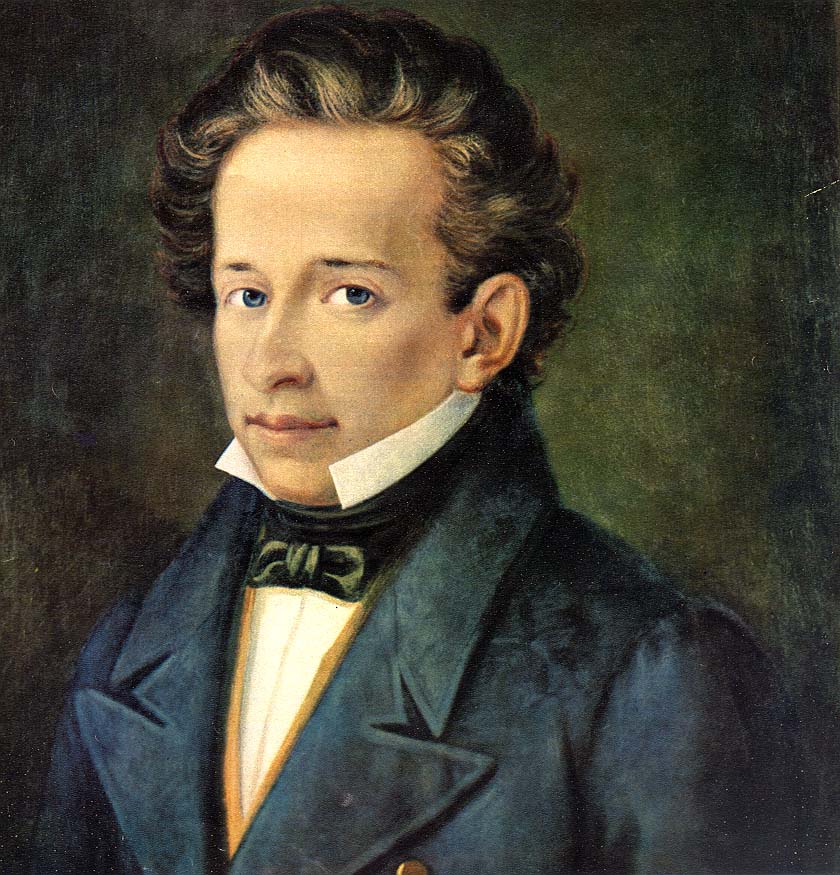
Giacomo Leopardi

Giacomo Leopardi was an Italian philosopher, poet, essayist, and philologist. Born in Recanati into a noble family, he is often considered the greatest Italian poet of the 19th century. Leopardi's works are noted for their pessimism and philosophical depth, exploring existential themes such as suffering, the nature of happiness, and the human condition. His notable works include the collection "Canti" and the philosophical dialogue "Operette morali." He died young at the age of 38 in Naples.

June 29, 1798

June 14, 1837

Italian

Giacomo Leopardi

Page 1 of 2

Previous

Next

Page 1 of 2

Aspasia.

    At times thy image to my mind returns,
Aspasia. In the crowded streets it gleams
Upon me, for an instant, as I pass,
In other faces; or in lonely fields,
At noon-tide bright, beneath the silent stars,
With sudden and with startling vividness,
As if awakened by sweet harmony,
The splendid vision rises in my soul.
How worshipped once, ye gods, what a delight
To me, what torture, too! Nor do I e'er
The odor of the flowery fields inhale,
Or perfume of the gardens of the town,
That I recall thee not, as on that day,
When in thy sumptuous rooms, so redolent
Of all the fragrant flowers of the spring,
Arrayed in robe of violet hue, thy form
Angelic I beheld, as it reclined
On dainty cushions ...

Giacomo Leopardi

Calm After Storm.

    The storm hath passed;
I hear the birds rejoice; the hen,
Returned into the road again,
Her cheerful notes repeats. The sky serene
Is, in the west, upon the mountain seen:
The country smiles; bright runs the silver stream.
Each heart is cheered; on every side revive
The sounds, the labors of the busy hive.
The workman gazes at the watery sky,
As standing at the door he sings,
His work in hand; the little wife goes forth,
And in her pail the gathered rain-drops brings;
The vendor of his wares, from lane to lane,
Begins his daily cry again.
The sun returns, and with his smile illumes
The villas on the neighboring hills;
Through open terraces and balconies,
The genial light pervades the ...

Giacomo Leopardi

Consalvo.

    Approaching now the end of his abode
On earth, Consalvo lay; complaining once,
Of his hard fate, but now quite reconciled,
When, in the midst of his fifth lustre, o'er
His head oblivion, so longed-for, hung.
As for some time, so, on his dying day,
He lay, abandoned by his dearest friends:
For in the world, few friends to him will cling,
Who shows that he is weary of the world.
Yet she was at his side, by pity led,
In his lone wretchedness to comfort him,
Who was alone and ever in his thought;
Elvira, for her loveliness renowned;
And knowing well her power; that a look,
A single sweet and gracious word from her,
A thousand-fold repeated in the heart,
Devoted, of her hapless...

Giacomo Leopardi

First Love.

    Ah, well can I the day recall, when first
The conflict fierce of love I felt, and said:
If this be love, how hard it is to bear!

With eyes still fixed intent upon the ground,
I saw but her, whose artless innocence,
Triumphant took possession of this heart.

Ah, Love, how badly hast thou governed me!
Why should affection so sincere and pure,
Bring with it such desire, such suffering?

Why not serene, and full, and free from guile
But sorrow-laden, and lamenting sore,
Should joy so great into my heart descend?

O tell me, tender heart, that sufferest so,
Why with that thought such anguish should be blent,
Compared with which, all other thoughts were naught?

That t...

Giacomo Leopardi

Fragments.

I.

I round the threshold wandering here,
Vainly the tempest and the rain invoke,
That they may keep my lady prisoner.

And yet the wind was howling in the woods,
The roving thunder bellowing in the clouds,
Before the dawn had risen in the sky.

O ye dear clouds! O heaven! O earth! O trees!
My lady goes! Have mercy, if on earth
Unhappy lovers ever mercy find!

Awake, ye whirlwinds! storm-charged clouds, awake,
O'erwhelm me with your floods, until the sun
To other lands brings back the light of day!

Heaven opens; the wind falls; the grass, the leaves
Are motionless, around; the dazzling sun
In my tear-laden eyes remorseless shines.


II.

The light of d...

Giacomo Leopardi

Hymn To The Patriarchs. Or Of The Beginnings Of The Human Race.

    Illustrious fathers of the human race,
Of you, the song of your afflicted sons
Will chant the praise; of you, more dear, by far,
Unto the Great Disposer of the stars,
Who were not born to wretchedness, like ours.
Immedicable woes, a life of tears,
The silent tomb, eternal night, to find
More sweet, by far, than the ethereal light,
These things were not by heaven's gracious law
Imposed on you. If ancient legends speak
Of sins of yours, that brought calamity
Upon the human race, and fell disease,
Alas, the sins more terrible, by far,
Committed by your children, and their souls
More restless, and with mad ambition fixed,
Against them roused the wrath of angry gods,
The hand of all-sustaining Natu...

Giacomo Leopardi

Imitation.

    Wandering from the parent bough,
Little, trembling leaf,
Whither goest thou?
"From the beech, where I was born,
By the north wind was I torn.
Him I follow in his flight,
Over mountain, over vale,
From the forest to the plain,
Up the hill, and down again.
With him ever on the way:
More than that, I cannot say.
Where I go, must all things go,
Gentle, simple, high and low:
Leaves of laurel, leaves of rose;
Whither, heaven only knows!"

Giacomo Leopardi

Love And Death.

    Children of Fate, in the same breath
Created were they, Love and Death.
Such fair creations ne'er were seen,
Or here below, or in the heaven serene.
The first, the source of happiness,
The fount whence flows the greatest bliss
That in the sea of being e'er is found;
The last each sorrow gently lulls,
Each harsh decree of Fate annuls.
Fair child with beauty crowned,
Sweet to behold, not such
As cowards paint her in their fright,
She in young Love's companionship
Doth often take delight,
As they o'er mortal paths together fly,
Chief comforters of every loyal heart.
Nor ever is the heart more wise
Than when Love smites it, nor defies
More scornfully life's misery,
And f...

Giacomo Leopardi

Night Song Of A Wandering Shepherd In Asia.

    What doest thou in heaven, O moon?
Say, silent moon, what doest thou?
Thou risest in the evening; thoughtfully
Thou wanderest o'er the plain,
Then sinkest to thy rest again.
And art thou never satisfied
With going o'er and o'er the selfsame ways?
Art never wearied? Dost thou still
Upon these valleys love to gaze?
How much thy life is like
The shepherd's life, forlorn!
He rises in the early dawn,
He moves his flock along the plain;
The selfsame flocks, and streams, and herbs
He sees again;
Then drops to rest, the day's work o'er;
And hopes for nothing more.
Tell me, O moon, what signifies his life
To him, thy life to thee? Say, whither tend
My weary, short-lived pilgr...

Giacomo Leopardi

On An Old Sepulchral Bas-Relief.

Where Is Seen A Young Maiden, Dead, In The Act Of Departing, Taking Leave Of Her Family.


Where goest thou? Who calls
Thee from my dear ones far away?
Most lovely maiden, say!
Alone, a wanderer, dost thou leave
Thy father's roof so soon?
Wilt thou unto its threshold e'er return?
Wilt thou make glad one day,
Those, who now round thee, weeping, mourn?

Fearless thine eye, and spirited thy act;
And yet thou, too, art sad.
If pleasant or unpleasant be the road,
If gay or gloomy be the new abode,
To which thou journeyest, indeed,
In that grave face, how difficult to read!
Ah, hard to me the problem still hath seemed;
Not hath the world, perhaps, yet understood,
If thou beloved,...

Giacomo Leopardi

On Dante's Monument, 1818.

(THEN UNFINISHED.)


Though all the nations now
Peace gathers under her white wings,
The minds of Italy will ne'er be free
From the restraints of their old lethargy,
Till our ill-fated land cling fast
Unto the glorious memories of the Past.
Oh, lay it to thy heart, my Italy,
Fit honor to thy dead to pay;
For, ah, their like walk not thy streets to-day!
Nor is there one whom thou canst reverence!
Turn, turn, my country, and behold
That noble band of heroes old,
And weep, and on thyself thy anger vent,
For without anger, grief is impotent:
Oh, turn, and rouse thyself for shame,
Blush at the thought of sires so great,
Of children so degenerate!

Alien in mien, in geni...

Giacomo Leopardi

On The Portrait Of A Beautiful Woman, Carved On Her Monument.

    Such wast thou: now in earth below,
Dust and a skeleton thou art.
Above thy bones and clay,
Here vainly placed by loving hands,
Sole guardian of memory and woe,
The image of departed beauty stands.
Mute, motionless, it seems with pensive gaze
To watch the flight of the departing days.
That gentle look, that, wheresoe'er it fell,
As now it seems to fall,
Held fast the gazer with its magic spell;
That lip, from which as from some copious urn,
Redundant pleasure seems to overflow;
That neck, on which love once so fondly hung;
That loving hand, whose tender pressure still
The hand it clasped, with trembling joy would thrill;
That bosom, whose transparent loveliness
The color from t...

Giacomo Leopardi

Recollections.

    Ye dear stars of the Bear, I did not think
I should again be turning, as I used,
To see you over father's garden shine,
And from the windows talk with you again
Of this old house, where as a child I dwelt,
And where I saw the end of all my joys.
What charming images, what fables, once,
The sight of you created in my thought,
And of the lights that bear you company!
Silent upon the verdant clod I sat,
My evening thus consuming, as I gazed
Upon the heavens, and listened to the chant
Of frogs that in the distant marshes croaked;
While o'er the hedges, ditches, fire-flies roamed,
And the green avenues and cypresses
In yonder grove were murmuring to the wind;
While in the house were heard, at inter...

Giacomo Leopardi

Scherzo.

    When, as a boy, I went
To study in the Muses' school,
One of them came to me, and took
Me by the hand, and all that day,
She through the work-shop led me graciously,
The mysteries of the craft to see.
She guided me
Through every part,
And showed me all
The instruments of art,
And did their uses all rehearse,
In works alike of prose and verse.
I looked, and paused awhile,
Then asked: "O Muse, where is the file?"
"The file is out of order, friend, and we
Now do without it," answered she.
"But, to repair it, then, have you no care?"
"We should, indeed, but have no time to spare."

Giacomo Leopardi

The Dream.

    It was the morning; through the shutters closed,
Along the balcony, the earliest rays
Of sunlight my dark room were entering;
When, at the time that sleep upon our eyes
Its softest and most grateful shadows casts,
There stood beside me, looking in my face,
The image dear of her, who taught me first
To love, then left me to lament her loss.
To me she seemed not dead, but sad, with such
A countenance as the unhappy wear.
Her right hand near my head she sighing placed;
"Dost thou still live," she said to me, "and dost
Thou still remember what we were and are?"
And I replied: "Whence comest thou, and how,
Beloved and beautiful? Oh how, how I
Have grieved, still grieve for thee! Nor did I think
...

Giacomo Leopardi

The Evening Of The Holiday.

    The night is mild and clear, and without wind,
And o'er the roofs, and o'er the gardens round
The moon shines soft, and from afar reveals
Each mountain-peak serene. O lady, mine,
Hushed now is every path, and few and dim
The lamps that glimmer through the balconies.
Thou sleepest! in thy quiet rooms, how light
And easy is thy sleep! No care thy heart
Consumes; and little dost thou know or think,
How deep a wound thou in my heart hast made.
Thou sleepest; I to yonder heaven turn,
That seems to greet me with a loving smile,
And to that Nature old, omnipotent,
That doomed me still to suffer. "I to thee
All hope deny," she said, "e'en hope; nor may
Those eyes of thine e'er shine, save through their tears."...

Giacomo Leopardi

The Ginestra, Or The Flower Of The Wilderness.

    Here, on the arid ridge
Of dead Vesuvius,
Exterminator terrible,
That by no other tree or flower is cheered,
Thou scatterest thy lonely leaves around,
O fragrant flower,
With desert wastes content. Thy graceful stems
I in the solitary paths have found,
The city that surround,
That once was mistress of the world;
And of her fallen power,
They seemed with silent eloquence to speak
Unto the thoughtful wanderer.
And now again I see thee on this soil,
Of wretched, world-abandoned spots the friend,
Of ruined fortunes the companion, still.
These fields with barren ashes strown,
And lava, hardened into stone,
Beneath the pilgrim's feet, that hollow sound,
Where by their nest...

Giacomo Leopardi

The Infinite.

    This lonely hill to me was ever dear,
This hedge, which shuts from view so large a part
Of the remote horizon. As I sit
And gaze, absorbed, I in my thought conceive
The boundless spaces that beyond it range,
The silence supernatural, and rest
Profound; and for a moment I am calm.
And as I listen to the wind, that through
These trees is murmuring, its plaintive voice
I with that infinite compare;
And things eternal I recall, and all
The seasons dead, and this, that round me lives,
And utters its complaint. Thus wandering
My thought in this immensity is drowned;
And sweet to me is shipwreck on this sea.

Giacomo Leopardi

Page 1 of 2

Previous

Next

Page 1 of 2