Poetry logo

Poem of the day

Categories

Poetry Hubs

Simple Poetry's mission is to bring the beauty of poetry to everyone, creating a platform where poets can thrive.

Copyright Simple Poetry © 2026 • All Rights Reserved • Made with ♥ by Baptiste Faure.

Shortcuts

  • Poem of the day
  • Categories
  • Search Poetry
  • Contact

Ressources

  • Request a Poem
  • Submit a Poem
  • Help Center (FAQ)
  • Privacy Policy
  • Terms of Service
Browse poems by categories

Poems about Love

Poems about Life

Poems about Nature

Poems about Death

Poems about Friendship

Poems about Inspirational

Poems about Heartbreak

Poems about Sadness

Poems about Family

Poems about Hope

Poems about Happiness

Poems about Loss

Poems about War

Poems about Dreams

Poems about Spirituality

Poems about Courage

Poems about Freedom

Poems about Identity

Poems about Betrayal

Poems about Loneliness

Poetry around the world

Barcelona Poetry Events

Berlin Poetry Events

Buenos Aires Poetry Events

Cape Town Poetry Events

Dublin Poetry Events

Edinburgh Poetry Events

Istanbul Poetry Events

London Poetry Events

Melbourne Poetry Events

Mexico City Poetry Events

Mumbai Poetry Events

New York City Poetry Events

Paris Poetry Events

Prague Poetry Events

Rome Poetry Events

San Francisco Poetry Events

Sydney Poetry Events

Tokyo Poetry Events

Toronto Poetry Events

Vancouver Poetry Events

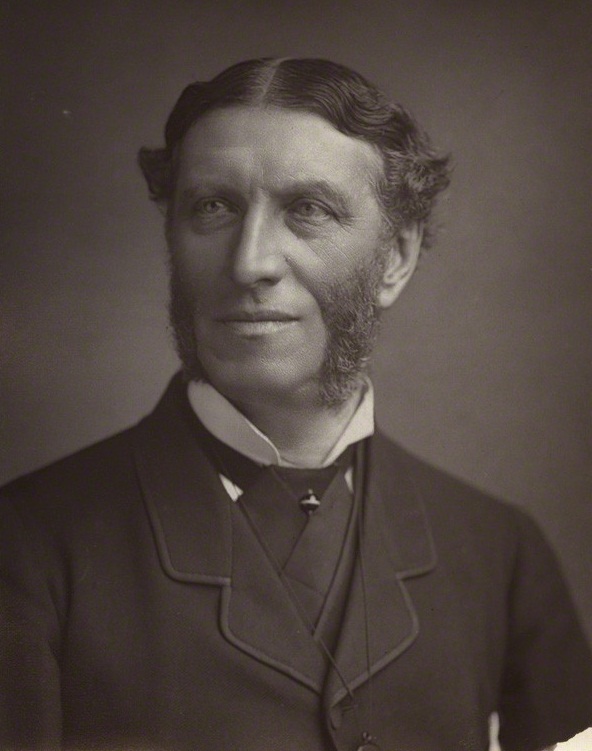
Matthew Arnold

Matthew Arnold was an English poet and cultural critic who worked as an inspector of schools. He is best remembered for his poetry, including works like 'Dover Beach,' and his influence on literary and social criticism. Arnold's work often grappled with the social issues and the loss of faith in the modern age, making him a central figure in the transition from Romanticism to Modernism in literature.

December 24, 1822

April 15, 1888

English

Matthew Arnold

Page 3 of 8

Previous

Next

Page 3 of 8

Haworth Churchyard

Where, under Loughrigg, the stream
Of Rotha sparkles, the fields
Are green, in the house of one
Friendly and gentle, now dead,
Wordsworth’s son-in-law, friend,
Four years since, on a mark’d
Evening, a meeting I saw.

Two friends met there, two fam’d
Gifted women. The one,
Brilliant with recent renown,
Young, unpractis’d, had told
With a Master’s accent her feign’d
Story of passionate life:
The other, maturer in fame,
Earning, she too, her praise
First in Fiction, had since
Widen’d her sweep, and survey’d
History, Politics, Mind.

They met, held converse: they wrote
In a book which of glorious souls
Held memorial: Bard,
Warrior, Statesman, had left
Their names:, chief treasure of all,
Scott had consign’d there his la...

Matthew Arnold

Hayeswater

A region desolate and wild.
Black, chafing water: and afloat,
And lonely as a truant child
In a waste wood, a single boat:
No mast, no sails are set thereon;
It moves, but never moveth on:
And welters like a human thing
Amid the wild waves weltering.

Behind, a buried vale doth sleep,
Far down the torrent cleaves its way:
In front the dumb rock rises steep,
A fretted wall of blue and grey;
Of shooting cliff and crumbled stone
With many a wild weed overgrown:
All else, black water: and afloat,
One rood from shore, that single boat.

Matthew Arnold

Heine’s Grave

‘Henri Heine’, , ’tis here!
The black tombstone, the name
Carved there, no more! and the smooth,
Swarded alleys, the limes
Touch’d with yellow by hot
Summer, but under them still
In September’s bright afternoon
Shadow, and verdure, and cool!
Trim Montmartre! the faint
Murmur of Paris outside;
Crisp everlasting-flowers,
Yellow and black, on the graves.

Half blind, palsied, in pain,
Hither to come, from the streets’
Uproar, surely not loath
Wast thou, Heine!, to lie
Quiet! to ask for closed
Shutters, and darken’d room,
And cool drinks, and an eased
Posture, and opium, no more!
Hither to come, and to sleep
Under the wings of Renown.

Ah! not little, when pain
Is most quelling, and man
Easily quell’d, and the fine...

Matthew Arnold

Horatian Echo

Omit, omit, my simple friend,
Still to inquire how parties tend,
Or what we fix with foreign powers.
If France and we are really friends,
And what the Russian Czar intends,
Is no concern of ours.

Us not the daily quickening race
Of the invading populace
Shall draw to swell that shouldering herd.
Mourn will we not your closing hour,
Ye imbeciles in present power,
Doom’d, pompous, and absurd!

And let us bear, that they debate
Of all the engine-work of state,
Of commerce, laws, and policy,
The secrets of the world’s machine,
And what the rights of man may mean,
With readier tongue than we.

Only, that with no finer art
They cloak the troubles of the heart
With pleasant smile, let us take care;
Nor with a lighter hand disp...

Matthew Arnold

Human Life

What mortal, when he saw,
Life’s voyage done, his heavenly Friend,
Could ever yet dare tell him fearlessly:
‘I have kept uninfring’d my nature’s law;
The inly-written chart thou gayest me
To guide me, I have steer’d by to the end’?

Ah! let us make no claim
On life’s incognizable sea
To too exact a steering of our way!
Let us not fret and fear to miss our aim
If some fair coast has lured us to make stay,
Or some friend hail’d us to keep company !

Aye, we would each fain drive
At random, and not steer by rule!
Weakness! and worse, weakness bestow’d in vain!
Winds from our side the unsuiting consort rive,
We rush by coasts where we had lief remain;
Man cannot, though he would, live chance’s fool.

No! as the foaming swathe
Of torn-...

Matthew Arnold

Immortality

Foil'd by our fellow-men, depress'd, outworn,
We leave the brutal world to take its way,
And, Patience! in another life, we say
The world shall be thrust down, and we up-borne.

And will not, then, the immortal armies scorn
The world's poor, routed leavings? or will they,
Who fail'd under the heat of this life's day,
Support the fervours of the heavenly morn?

No, no! the energy of life may be
Kept on after the grave, but not begun;
And he who flagg'd not in the earthly strife,

From strength to strength advancing, only he,
His soul well-knit, and all his battles won,
Mounts, and that hardly, to eternal life.

Matthew Arnold

In Utrumque Paratus

If, in the silent mind of One all-pure,
At first imagin’d lay
The sacred world; and by procession sure
From those still deeps, in form and colour drest,
Seasons alternating, and night and day,
The long-mus’d thought to north south east and west
Took then its all-seen way:

O waking on a world which thus-wise springs!
Whether it needs thee count
Betwixt thy waking and the birth of things
Ages or hours: O waking on Life’s stream!
By lonely pureness to the all-pure Fount
(Only by this thou canst) the colour’d dream
Of Life remount.

Thin, thin the pleasant human noises grow;
And faint the city gleams;
Rare the lone pastoral huts: marvel not thou!
The solemn peaks but to the stars are known,
But to the stars, and the cold lunar beams:
Alon...

Matthew Arnold

Indifference

I must not say that thou wert true,
Yet let me say that thou wert fair.
And they that lovely face who view,
They will not ask if truth be there.

Truth, what is truth? Two bleeding hearts
Wounded by men, by Fortune tried,
Outwearied with their lonely parts,
Vow to beat henceforth side by side.

The world to then was stern and drear;
Their lot was but to weep and moan.
Ah, let then keep their faith sincere,
For neither could subsist alone!

But souls whom some benignant breath
Has charm’d at birth from gloom and care,
These ask no love, these plight no faith,
For they are happy as they are.

The world to them may homage make,
And garlands for their forehead weave.
And what the world can give, they take:
But they bring more tha...

Matthew Arnold

Iseult Of Brittany

A year had flown, and o’er the sea away,
In Cornwall, Tristram and Queen Iseult lay;
In King Marc’s chapel, in Tyntagel old
There in a ship they bore those lovers cold.
The young surviving Iseult, one bright day,
Had wander’d forth. Her children were at play
In a green circular hollow in the heath
Which borders the sea-shore a country path
Creeps over it from the till’d fields behind.
The hollow’s grassy banks are soft-inclined,
And to one standing on them, far and near
The lone unbroken view spreads bright and clear
Over the waste. This cirque of open ground
Is light and green; the heather, which all round
Creeps thickly, grows not here; but the pale grass
Is strewn with rocks, and many a shiver’d mass
Of vein’d white-gleaming quartz, and here and there
...

Matthew Arnold

Iseult Of Ireland

Raise the light, my page! that I may see her.
Thou art come at last, then, haughty Queen!
Long I’ve waited, long I’ve fought my fever;
Late thou comest, cruel thou hast been.

Iseult

Blame me not, poor sufferer! that I tarried;
Bound I was, I could not break the band.
Chide not with the past, but feel the present!
I am here we meet I hold thy hand.

Tristram

Thou art come, indeed thou hast rejoin’d me;
Thou hast dared it but too late to save.
Fear not now that men should tax thine honour!
I am dying: build (thou may’st) my grave!

Iseult

Tristram, ah, for love of Heaven, speak kindly!
What, I hear these bitter words from thee?
Sick with grief I am, and faint with travel
Take my hand dear Tristram, look on me!

Matthew Arnold

Isolation - To Marguerite

We were apart; yet, day by day,
I bade my heart more constant be.
I bade it keep the world away,
And grow a home for only thee;
Nor fear'd but thy love likewise grew,
Like mine, each day, more tried, more true.

The fault was grave! I might have known,
What far too soon, alas! I learn'd
The heart can bind itself alone,
And faith may oft be unreturn'd.
Self-sway'd our feelings ebb and swell
Thou lov'st no more; Farewell! Farewell!

Farewell! and thou, thou lonely heart,
Which never yet without remorse
Even for a moment didst depart
From thy remote and spherèd course
To haunt the place where passions reign
Back to thy solitude again!

Back! with the conscious thrill of shame
Which Luna felt, that summer-night,
Flash through her...

Matthew Arnold

Lines Written By A Death-Bed

Yes, now the longing is o’erpast,
Which, dogg’d by fear and fought by shame,
Shook her weak bosom day and night,
Consum’d her beauty like a flame,
And dimm’d it like the desert blast.
And though the curtains hide her face,
Yet were it lifted to the light
The sweet expression of her brow
Would charm the gazer, till his thought
Eras’d the ravages of time,
Fill’d up the hollow cheek, and brought
A freshness back as of her prime,
So healing is her quiet now.
So perfectly the lines express
A placid, settled loveliness;
Her youngest rival’s freshest grace.

But ah, though peace indeed is here,
And ease from shame, and rest from fear;
Though nothing can dismarble now
The smoothness of that limpid brow;
Yet is a calm like this, in truth,
...

Matthew Arnold

Lines Written In Kensington Gardens

In this lone, open glade I lie,
Screen'd by deep boughs on either hand;
And at its end, to stay the eye,
Those black-crown'd, red-boled pine-trees stand!

Birds here make song, each bird has his,
Across the girdling city's hum.
How green under the boughs it is!
How thick the tremulous sheep-cries come!

Sometimes a child will cross the glade
To take his nurse his broken toy;
Sometimes a thrush flit overhead
Deep in her unknown day's employ.

Here at my feet what wonders pass,
What endless, active life is here!
What blowing daisies, fragrant grass!
An air-stirr'd forest, fresh and clear.

Scarce fresher is the mountain-sod
Where the tired angler lies, stretch'd out,
And, eased of basket and of rod,
Counts his day's spoil, the ...

Matthew Arnold

Longing

Come to me in my dreams, and then
By day I shall be well again!
For so the night will more than pay
The hopeless longing of the day.

Come, as thou cam'st a thousand times,
A messenger from radiant climes,
And smile on thy new world, and be
As kind to others as to me!

Or, as thou never cam'st in sooth,
Come now, and let me dream it truth,
And part my hair, and kiss my brow,
And say, My love why sufferest thou?

Come to me in my dreams, and then
By day I shall be well again!
For so the night will more than pay
The hopeless longing of the day.

Matthew Arnold

Marsyas

CALLICLES (from below)


As the sky-brightening south-wind clears the day,
And makes the mass’d clouds roll,
The music of the lyre blows away
The clouds that wrap the soul.

Oh, that Fate had let me see
That triumph of the sweet persuasive lyre!
That famous, final victory
When jealous Pan with Marsyas did conspire!

When, from far Parnassus’ side,
Young Apollo, all the pride
Of the Phrygian flutes to tame,
To the Phrygian highlands came!
Where the long green reed-beds sway
In the rippled waters grey
Of that solitary lake
Where Maeander’s springs are born;
Where the ridg’d pine-wooded roots
Of Messogis westward break,
Mounting westward, high and higher.
There was held the famous strife;
There the Phrygian brought his...

Matthew Arnold

Memorial Verses - April 1850

Goethe in Weimar sleeps, and Greece,
Long since, saw Byron's struggle cease.
But one such death remain'd to come;
The last poetic voice is dumb
We stand to-day by Wordsworth's tomb.

When Byron's eyes were shut in death,
We bow'd our head and held our breath.
He taught us little; but our soul
Had felt him like the thunder's roll.
With shivering heart the strife we saw
Of passion with eternal law;
And yet with reverential awe
We watch'd the fount of fiery life
Which served for that Titanic strife.

When Goethe's death was told, we said:
Sunk, then, is Europe's sagest head.
Physician of the iron age,
Goethe has done his pilgrimage.
He took the suffering human race,
He read each wound, each weakness clear;
And struck his finger on th...

Matthew Arnold

Men Of Genius

Silent, the Lord of the world
Eyes from the heavenly height,
Girt by his far-shining train,
Us, who with banners unfurl’d
Fight life’s many-chanc’d fight
Madly below, in the plain.

Then saith the Lord to his own:
‘See ye the battle below?
Turmoil of death and of birth!
Too long let we them groan.
Haste, arise ye, and go;
Carry my peace upon earth.’

Gladly they rise at his call;
Gladly they take his command;
Gladly descend to the plain.
Alas! How few of them all,
Those willing servants, shall stand
In their Master’s presence again!

Some in the tumult are lost
Baffled, bewilder’d, they stray.
Some as prisoners draw breath.
Others, the bravest, are cross’d,
On the height of their bold-follow’d way,
By the swift...

Matthew Arnold

Monica’s Last Prayer

‘Oh could thy grave at home, at Carthage, be!’
Care not for that, and lay me where I fall.
Everywhere heard will be the judgment-call.
But at God’s altar, oh! remember me.

Thus Monica, and died in Italy.
Yet fervent had her longing been, through all
Her course, for home at last, and burial
With her own husband, by the Libyan sea.

Had been; but at the end, to her pure soul
All tie with all beside seem’d vain and cheap,
And union before God the only care.

Creeds pass, rites change, no altar standeth whole;
Yet we her memory, as she pray’d, will keep,
Keep by this: Life in God, and union there!

Matthew Arnold

Page 3 of 8

Previous

Next

Page 3 of 8