Poetry logo

Poem of the day

Categories

Poetry Hubs

Simple Poetry's mission is to bring the beauty of poetry to everyone, creating a platform where poets can thrive.

Copyright Simple Poetry © 2026 • All Rights Reserved • Made with ♥ by Baptiste Faure.

Shortcuts

  • Poem of the day
  • Categories
  • Search Poetry
  • Contact

Ressources

  • Request a Poem
  • Submit a Poem
  • Help Center (FAQ)
  • Privacy Policy
  • Terms of Service
Browse poems by categories

Poems about Love

Poems about Life

Poems about Nature

Poems about Death

Poems about Friendship

Poems about Inspirational

Poems about Heartbreak

Poems about Sadness

Poems about Family

Poems about Hope

Poems about Happiness

Poems about Loss

Poems about War

Poems about Dreams

Poems about Spirituality

Poems about Courage

Poems about Freedom

Poems about Identity

Poems about Betrayal

Poems about Loneliness

Poetry around the world

Barcelona Poetry Events

Berlin Poetry Events

Buenos Aires Poetry Events

Cape Town Poetry Events

Dublin Poetry Events

Edinburgh Poetry Events

Istanbul Poetry Events

London Poetry Events

Melbourne Poetry Events

Mexico City Poetry Events

Mumbai Poetry Events

New York City Poetry Events

Paris Poetry Events

Prague Poetry Events

Rome Poetry Events

San Francisco Poetry Events

Sydney Poetry Events

Tokyo Poetry Events

Toronto Poetry Events

Vancouver Poetry Events

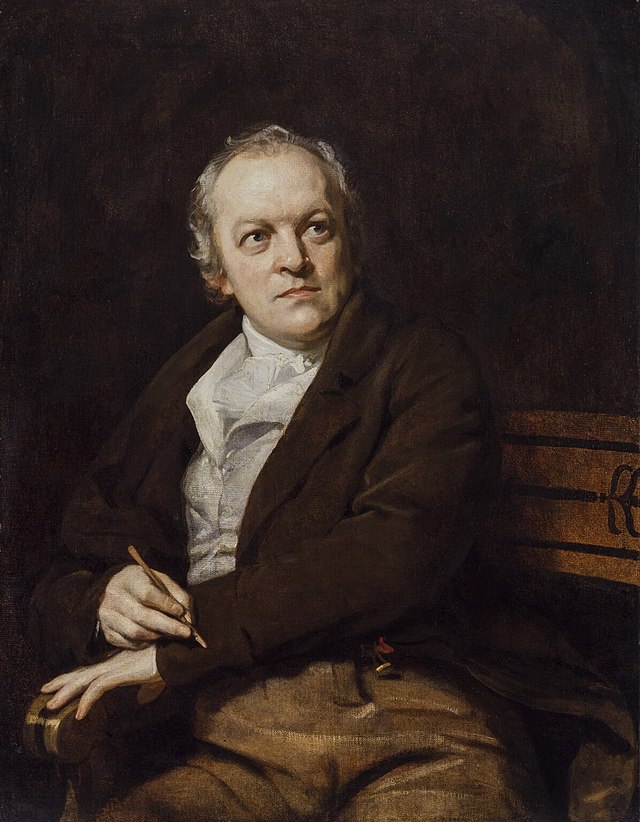
William Blake

William Blake was an English poet, painter, and printmaker, who is considered one of the seminal figures in the history of poetry and visual arts of the Romantic Age. Born in London, Blake was largely unrecognized during his lifetime but is now renowned for his expressive and mystical works that blend poetic and visual art. His notable works include 'Songs of Innocence and Experience' and 'The Marriage of Heaven and Hell'. His unique creative vision and philosophical outlook have influenced numerous artists and thinkers since his death.

November 28, 1757

August 12, 1827

English

William Blake

Page 4 of 8

Previous

Next

Page 4 of 8

Nurse's Song

When the voices of children are heard on the green,
And laughing is heard on the hill,
My heart is at rest within my breast,
And everything else is still.
"Then come home, my children, the sun is gone down,
And the dews of night arise;
Come, come, leave off play, and let us away,
Till the morning appears in the skies."

"No, no, let us play, for it is yet day,
And we cannot go to sleep;
Besides, in the sky the little birds fly,
And the hills are all covered with sheep."
"Well, well, go and play till the light fades away,
And then go home to bed."
The little ones leaped, and shouted, and laughed,
And all the hills echoed.

William Blake

Nurse's Song

When voices of children are heard on the green,
And whisperings are in the dale,
The days of my youth rise fresh in my mind,
My face turns green and pale.

Then come home, my children, the sun is gone down,
And the dews of night arise;
Your spring and your day are wasted in play,
And your winter and night in disguise.

William Blake

On Another's Sorrow

Can I see another's woe,
And not be in sorrow too?
Can I see another's grief,
And not seek for kind relief?

Can I see a falling tear,
And not feel my sorrow's share?
Can a father see his child
Weep, nor be with sorrow filled?

Can a mother sit and hear
An infant groan, an infant fear?
No, no! never can it be!
Never, never can it be!

And can He who smiles on all
Hear the wren with sorrows small,
Hear the small bird's grief and care,
Hear the woes that infants bear--

And not sit beside the next,
Pouring pity in their breast,
And not sit the cradle near,
Weeping tear on infant's tear?

And not sit both night and day,
Wiping all our tears away?
Oh no! never can it be!
Never, never can it be!

William Blake

Piping Down The Valleys Wild

Piping down the valleys wild,
Piping songs of pleasant glee,
On a cloud I saw a child,
And he laughing said to me:

'Pipe a song about a lamb!'
So I piped with merry cheer.
'Piper, pipe that song again.'
So I piped: he wept to hear.

'Drop thy pipe, thy happy pipe;
Sing thy songs of happy cheer.'
So I sung the same again,
While he wept with joy to hear.

'Piper, sit thee down and write
In a book, that all may read.'
So he vanished from my sight,
And I plucked a hollow reed,

And I made a rural pen,
And I stained the water clear,
And I wrote my happy songs
Every child may joy to hear.

William Blake

Preludium To America

The shadowy Daughter of Urthona stood before red Orc,
When fourteen suns had faintly journey'd o'er his dark abode:
His food she brought in iron baskets, his drink in cups of iron:
Crown'd with a helmet and dark hair the nameless female stood;
A quiver with its burning stores, a bow like that of night,
When pestilence is shot from heaven: no other arms she need!
Invulnerable though naked, save where clouds roll round her loins
Their awful folds in the dark air: silent she stood as night;
For never from her iron tongue could voice or sound arise,
But dumb till that dread day when Orc assay'd his fierce embrace.
'Dark Virgin,' said the hairy youth, 'thy father stern, abhorr'd,
Rivets my tenfold chains while still on high my spirit soars;
Sometimes an Eagle screaming in the sky, som...

William Blake

Preludium To Europe

The nameless shadowy female rose from out the breast of Orc,
Her snaky hair brandishing in the winds of Enitharmon;
And thus her voice arose:

'O mother Enitharmon, wilt thou bring forth other sons?
To cause my name to vanish, that my place may not be found,
For I am faint with travail,
Like the dark cloud disburden'd in the day of dismal thunder.

My roots are brandish'd in the heavens, my fruits in earth beneath
Surge, foam and labour into life, first born and first consum'd!
Consumed and consuming!
Then why shouldst thou, accursed mother, bring me into life?

I wrap my turban of thick clouds around my lab'ring head,
And fold the sheety waters as a mantle round my limbs;
Yet the red sun and moon
And all the overflowing stars rain down prolific pains.

William Blake

Proverbs Of Hell

In seed time learn, in harvest teach, in winter enjoy.
Drive your cart and your plow over the bones of the dead.
The road of excess leads to the palace of wisdom.
Prudence is a rich, ugly old maid courted by Incapacity.
He who desires but acts not, breeds pestilence.
The cut worm forgives the plow.
Dip him in the river who loves water.
A fool sees not the same tree that a wise man sees.
He whose face gives no light, shall never become a star.
Eternity is in love with the productions of time.
The busy bee has no time for sorrow.
The hours of folly are measur'd by the clock; but of wisdom, no clock can measure.
All wholesome food is caught without a net or a trap.
Bring out number, weight and measure in a year of dearth.
No bird soars too high, if he soars with his own wi...

William Blake

Reeds Of Innocence

Piping down the valleys wild,
Piping songs of pleasant glee,
On a cloud I saw a child,
And he laughing said to me:

'Pipe a song about a Lamb!'
So I piped with merry cheer.
'Piper, pipe that song again;'
So I piped: he wept to hear.

'Drop thy pipe, thy happy pipe;
Sing thy songs of happy cheer!'
So I sung the same again,
While he wept with joy to hear.

'Piper, sit thee down and write
In a book that all may read.'
So he vanish'd from my sight;
And I pluck'd a hollow reed,

And I made a rural pen,
And I stain'd the water clear,
And I wrote my happy songs
Every child may joy to hear.

William Blake

Samson

Samson, the strongest of the children of men,
I sing; how he was foiled by woman's arts,
by a false wife brought to the gates of death!

O Truth! that shinest with propitious beams,
turning our earthly night to heavenly day,
from presence of the Almighty Father,
thou visitest our darkling world with blessed feet,
bringing good news of Sin and Death destroyed!

O whiterobed Angel,
guide my timorous hand to write as on a lofty rock with iron pen the words of truth,
that all who pass may read.
Now Night, noontide of damned spirits,
over the silent earth spreads her pavilion,
while in dark council sat Philista's lords;
and, where strength failed, black thoughts in ambush lay.

Their helmed youth and aged warriors in dust together lie,
and Desolation...

William Blake

Several Questions Answered

What is it men in women do require?
The lineaments of Gratified Desire.
What is it women do in men require?
The lineaments of Gratified Desire.

The look of love alarms
Because 'tis fill'd with fire;
But the look of soft deceit
Shall Win the lover's hire.

Soft Deceit and Idleness,
These are Beauty's sweetest dress.

He who binds to himself a joy
Dot the winged life destroy;
But he who kisses the joy as it flies
Lives in Eternity's sunrise.

William Blake

Silent, Silent Night

Silent, silent night,
Quench the holy light
Of thy torches bright;

For possessed of Day
Thousand spirits stray
That sweet joys betray.

Why should joys be sweet
Used with deceit,
Nor with sorrows meet?

But an honest joy
Does itself destroy
For a harlot coy.

William Blake

Sleep! Sleep! Beauty Bright

Sleep! sleep! beauty bright,
Dreaming o'er the joys of night;
Sleep! sleep! in thy sleep
Little sorrows sit and weep.

Sweet Babe, in thy face
Soft desires I can trace,
Secret joys and secret smiles,
Little pretty infant wiles.

As thy softest limbs I feel,
Smiles as of the morning steal
O'er thy cheek, and o'er thy breast
Where thy little heart does rest.

O! the cunning wiles that creep
In thy little heart asleep.
When thy little heart does wake
Then the dreadful lightnings break,

From thy cheek and from thy eye,
O'er the youthful harvests nigh.
Infant wiles and infant smiles
Heaven and Earth of peace beguiles.

William Blake

Song

My silks and fine array,
My smiles and languish'd air,
By love are driv'n away;
And mournful lean Despair
Brings me yew to deck my grave;
Such end true lovers have.

His face is fair as heav'n
When springing buds unfold;
O why to him was't giv'n
Whose heart is wintry cold?
His breast is love's all-worshipp'd tomb,
Where all love's pilgrims come.

Bring me an axe and spade,
Bring me a winding sheet;
When I my grave have made
Let winds and tempests beat:
Then down I'll lie as cold as clay.
True love doth pass away!

William Blake

Song: Memory, Hither Come

Memory, hither come,
And tune your merry notes;
And, while upon the wind
Your music floats,

I'll pore upon the stream
Where sighing lovers dream,
And fish for fancies as they pass
Within the watery glass.

I'll drink of the clear stream,
And hear the linnet's song;
And there I'll lie and dream
The day along:

And, when night comes, I'll go
To places fit for woe,
Walking along the darken'd valley
With silent Melancholy.

William Blake

Spring

Sound the flute!
Now it's mute!
Bird's delight,
Day and night,
Nightingale,
In the dale,
Lark in sky,--
Merrily,
Merrily merrily, to welcome in the year.

Little boy,
Full of joy;
Little girl,
Sweet and small;
Cock does crow,
So do you;
Merry voice,
Infant noise;
Merrily, merrily, to welcome in the year.

Little lamb,
Here I am;
Come and lick
My white neck;
Let me pull
Your soft wool;
Let me kiss
Your soft face;
Merrily, merrily, to welcome in the year.

William Blake

The Angel

I dreamt a dream! What can it mean?
And that I was a maiden Queen
Guarded by an Angel mild:
Witless woe was ne'er beguiled!

And I wept both night and day,
And he wiped my tears away;
And I wept both day and night,
And hid from him my heart's delight.

So he took his wings, and fled;
Then the morn blushed rosy red.
I dried my tears, and armed my fears
With ten-thousand shields and spears.

Soon my Angel came again;
I was armed, he came in vain;
For the time of youth was fled,
And grey hairs were on my head.

William Blake

The Angel That Presided O'er My Birth

The Angel that presided o'er my birth
Said, "Little creature, form'd of Joy and Mirth,
"Go love without the help of any Thing on Earth."

William Blake

The Birds

He. Where thou dwellest, in what grove,
Tell me Fair One, tell me Love;
Where thou thy charming nest dost build,
O thou pride of every field!

She. Yonder stands a lonely tree,
There I live and mourn for thee;
Morning drinks my silent tear,
And evening winds my sorrow bear.

He. O thou summer's harmony,
I have liv'd and mourn'd for thee;
Each day I mourn along the wood,
And night hath heard my sorrows loud.

She. Dost thou truly long for me?
And am I thus sweet to thee?
Sorrow now is at an end,
O my Lover and my Friend!

He. Come, on wings of joy we'll fly
To where my bower hangs on high;
Come, and make thy calm retreat
Among green leaves and blossoms sweet.

William Blake

Page 4 of 8

Previous

Next

Page 4 of 8