Poetry logo

Poem of the day

Categories

Poetry Hubs

Simple Poetry's mission is to bring the beauty of poetry to everyone, creating a platform where poets can thrive.

Copyright Simple Poetry © 2026 • All Rights Reserved • Made with ♥ by Baptiste Faure.

Shortcuts

  • Poem of the day
  • Categories
  • Search Poetry
  • Contact

Ressources

  • Request a Poem
  • Submit a Poem
  • Help Center (FAQ)
  • Privacy Policy
  • Terms of Service
Browse poems by categories

Poems about Love

Poems about Life

Poems about Nature

Poems about Death

Poems about Friendship

Poems about Inspirational

Poems about Heartbreak

Poems about Sadness

Poems about Family

Poems about Hope

Poems about Happiness

Poems about Loss

Poems about War

Poems about Dreams

Poems about Spirituality

Poems about Courage

Poems about Freedom

Poems about Identity

Poems about Betrayal

Poems about Loneliness

Poetry around the world

Barcelona Poetry Events

Berlin Poetry Events

Buenos Aires Poetry Events

Cape Town Poetry Events

Dublin Poetry Events

Edinburgh Poetry Events

Istanbul Poetry Events

London Poetry Events

Melbourne Poetry Events

Mexico City Poetry Events

Mumbai Poetry Events

New York City Poetry Events

Paris Poetry Events

Prague Poetry Events

Rome Poetry Events

San Francisco Poetry Events

Sydney Poetry Events

Tokyo Poetry Events

Toronto Poetry Events

Vancouver Poetry Events

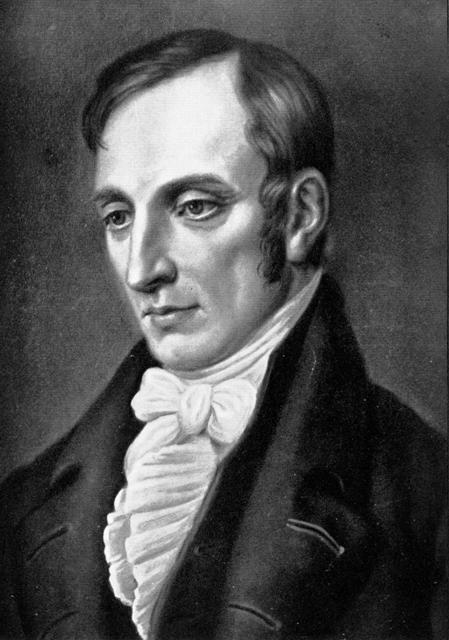
William Wordsworth

William Wordsworth was a major English Romantic poet who, with Samuel Taylor Coleridge, helped launch the Romantic Age in English literature with their joint publication 'Lyrical Ballads' in 1798. Born on April 7, 1770, Wordsworth's works are noted for their emphasis on the beauty of nature, the importance of emotion, and the value of the individual. His most famous work, 'The Prelude', is considered to be his masterpiece, which is a semi-autobiographical poem that he revised throughout his life.

April 7, 1770

April 23, 1850

English

William Wordsworth

Page 23 of 51

Previous

Next

Page 23 of 51

Lucy V

A slumber did my spirit seal;
I had no human fears:
She seem’d a thing that could not feel
The touch of earthly years.

No motion has she now, no force;
She neither hears nor sees;
Roll’d round in earth’s diurnal course,
With rocks, and stones, and trees.

William Wordsworth

Lyre! Though Such Power Do In Thy Magic Live

Lyre! though such power do in thy magic live
As might from India's farthest plain
Recall the not unwilling Maid,
Assist me to detain
The lovely Fugitive:
Check with thy notes the impulse which, betrayed
By her sweet farewell looks, I longed to aid.
Here let me gaze enrapt upon that eye,
The impregnable and awe-inspiring fort
Of contemplation, the calm port
By reason fenced from winds that sigh
Among the restless sails of vanity.
But if no wish be hers that we should part,
A humbler bliss would satisfy my heart.
Where all things are so fair,
Enough by her dear side to breathe the air
Of this Elysian weather;
And, on or in, or near, the brook, espy
Shade upon the sunshine lying
Faint and somewhat pensively;
And downward Image gaily vying

William Wordsworth

Malham Cove

Was the aim frustrated by force or guile,
When giants scooped from out the rocky ground,
Tier under tier, this semicirque profound?
(Giants the same who built in Erin's isle
That Causeway with incomparable toil!)
Oh, had this vast theatric structure wound
With finished sweep into a perfect round,
No mightier work had gained the plausive smile
Of all-beholding Phoebus! But, alas,
Vain earth! false world! Foundations must be laid
In Heaven; for, 'mid the wreck of IS and WAS,
Things incomplete and purposes betrayed
Make sadder transits o'er thought's optic glass
Than noblest objects utterly decayed.

William Wordsworth

Mark The Concentrated Hazels That Enclose

Mark the concentred hazels that enclose
Yon old grey Stone, protected from the ray
Of noontide suns: and even the beams that play
And glance, while wantonly the rough wind blows,
Are seldom free to touch the moss that grows
Upon that roof, amid embowering gloom,
The very image framing of a Tomb,
In which some ancient Chieftain finds repose
Among the lonely mountains. Live, ye trees!
And thou, grey Stone, the pensive likeness keep
Of a dark chamber where the Mighty sleep:
For more than Fancy to the influence bends
When solitary Nature condescends
To mimic Time's forlorn humanities.

William Wordsworth

Mary Queen Of Scots - Landing At The Mouth Of The Derwent, Workington

Dear to the Loves, and to the Graces vowed,
The Queen drew back the wimple that she wore;
And to the throng, that on the Cumbrian shore
Her landing hailed, how touchingly she bowed!
And like a Star (that, from a heavy cloud
Of pine-tree foliage poised in air, forth darts,
When a soft summer gale at evening parts
The gloom that did its loveliness enshroud)
She smiled; but Time, the old Saturnian seer,
Sighed on the wing as her foot pressed the strand,
With step prelusive to a long array
Of woes and degradations hand in hand
Weeping captivity, and shuddering fear
Stilled by the ensanguined block of Fotheringay!

William Wordsworth

Maternal Grief

Departed Child! I could forget thee once
Though at my bosom nursed; this woeful gain
Thy dissolution brings, that in my soul
Is present and perpetually abides
A shadow, never, never to be displaced
By the returning substance, seen or touched,
Seen by mine eyes, or clasped in my embrace.
Absence and death how differ they! and how
Shall I admit that nothing can restore
What one short sigh so easily removed?
Death, life, and sleep, reality and thought,
Assist me, God, their boundaries to know,
O teach me calm submission to thy Will!
The Child she mourned had overstepped the pale
Of Infancy, but still did breathe the air
That sanctifies its confines, and partook
Reflected beams of that celestial light
To all the Little-ones on sinful earth
Not unvouchsaf...

William Wordsworth

Matthew

If Nature, for a favourite child,
In thee hath tempered so her clay,
That every hour thy heart runs wild,
Yet never once doth go astray,

Read o'er these lines; and then review
This tablet, that thus humbly rears
In such diversity of hue
Its history of two hundred years.

When through this little wreck of fame,
Cipher and syllable! thine eye
Has travelled down to Matthew's name,
Pause with no common sympathy.

And, if a sleeping tear should wake,
Then be it neither checked nor stayed:
For Matthew a request I make
Which for himself he had not made.

Poor Matthew, all his frolics o'er,
Is silent as a standing pool;
Far from the chimney's merry roar,
And murmur of the village school.

The sighs which Matthew heaved wer...

William Wordsworth

Memorials Of A Tour In Italy, 1837 - II. - The Pine Of Monte Mario At Rome

I saw far off the dark top of a Pine
Look like a cloud, a slender stem the tie
That bound it to its native earth, poised high
'Mid evening hues, along the horizon line,
Striving in peace each other to outshine.
But when I learned the Tree was living there,
Saved from the sordid axe by Beaumont's care,
Oh, what a gush of tenderness was mine!
The rescued Pine-Tree, with its sky so bright
And cloud-like beauty, rich in thoughts of home,
Death-parted friends, and days too swift in flight,
Supplanted the whole majesty of Rome
(Then first apparent from the Pincian Height)
Crowned with St. Peter's everlasting Dome.

William Wordsworth

Memorials Of A Tour In Italy, 1837 - III. - At Rome

Is this, ye Gods, the Capitolian Hill?
Yon petty Steep in truth the fearful Rock,
Tarpeian named of yore, and keeping still
That name, a local Phantom proud to mock
The Traveler's expectation? Could our Will
Destroy the ideal Power within, 'twere done
Thro' what men see and touch, slaves wandering on,
Impelled by thirst of all but Heaven-taught skill.
Full oft, our wish obtained, deeply we sigh;
Yet not unrecompensed are they who learn,
From that depression raised, to mount on high
With stronger wing, more clearly to discern
Eternal things; and, if need be, defy
Change, with a brow not insolent, though stern.

William Wordsworth

Memorials Of A Tour In Italy, 1837 - IV. - At Rome – Regrets - In Allusion To Niebuhr And Other Modern Historians

Those old credulities, to nature dear,
Shall they no longer bloom upon the stock
Of History, stript naked as a rock
'Mid a dry desert? What is it we hear?
The glory of Infant Rome must disappear,
Her morning splendours vanish, and their place
Know them no more. If Truth, who veiled her face
With those bright beams yet hid it not, must steer
Henceforth a humbler course perplexed and slow;
One solace yet remains for us who came
Into this world in days when story lacked
Severe research, that in our hearts we know
How, for exciting youth's heroic flame,
Assent is power, belief the soul of fact.

William Wordsworth

Memorials Of A Tour In Italy, 1837 - IX. - At Albano

Days passed and Monte Calvo would not clear
His head from mist; and, as the wind sobbed through
Albano's dripping Ilex avenue,
My dull forebodings in a Peasant's ear
Found casual vent. She said, "Be of good cheer;
Our yesterday's procession did not sue
In vain; the sky will change to sunny blue,
Thanks to our Lady's grace." I smiled to hear,
But not in scorn: the Matron's Faith may lack
The heavenly sanction needed to ensure
Fulfillment; but, we trust, her upward track
Stops not at this low point, nor wants the lure
Of flowers the Virgin without fear may own,
For by her Son's blest hand the seed was sown.

William Wordsworth

Memorials Of A Tour In Italy, 1837 - To Henry Crabb Robinson

    Companion! by whose buoyant Spirit cheered,
In whose experience trusting, day by day
Treasures I gained with zeal that neither feared
The toils nor felt the crosses of the way,
These records take, and happy should I be
Were but the Gift a meet Return to thee
For kindnesses that never ceased to flow,
And prompt self-sacrifice to which I owe
Far more than any heart but mine can know.

W. Wordsworth.

Rydal Mount, Feb. 14th, 1842.

William Wordsworth

Memorials Of A Tour In Italy, 1837 - V. - Continued

Complacent Fictions were they, yet the same
Involved a history of no doubtful sense,
History that proves by inward evidence
From what a precious source of truth it came.
Ne'er could the boldest Eulogist have dared
Such deeds to paint, such characters to frame,
But for coeval sympathy prepared
To greet with instant faith their loftiest claim.
None but a noble people could have loved
Flattery in Ancient Rome's pure-minded style:
Not in like sort the Runic Scald was moved;
He, nursed 'mid savage passions that defile
Humanity, sang feats that well might call
For the blood-thirsty mead of Odin's riotous Hall.

William Wordsworth

Memorials Of A Tour In Italy, 1837 - VI. - Plea For The Historian

Forbear to deem the Chronicler unwise,
Ungentle, or untouched by seemly ruth,
Who, gathering up all that Time's envious tooth
Has spared of sound and grave realities,
Firmly rejects those dazzling flatteries,
Dear as they are to unsuspecting Youth,
That might have drawn down Clio from the skies
To vindicate the majesty of truth.
Such was her office while she walked with men,
A Muse, who, not unmindful of her Sire
All-ruling Jove, whate'er the theme might be
Revered her Mother, sage Mnemosyne,
And taught her faithful servants how the lyre
Should animate, but not mislead, the pen.

William Wordsworth

Memorials Of A Tour In Italy, 1837 - VII. – At Rome

They who have seen the noble Roman's scorn
Break forth at thought of laying down his head,
When the blank day is over, garroted
In his ancestral palace, where, from morn
To night, the desecrated floors are worn
By feet of purse-proud strangers; they who have read
In one meek smile, beneath a peasant's shed,
How patiently the weight of wrong is borne;
They who have heard some learned Patriot treat
Of freedom, with mind grasping the whole theme
From ancient Rome, downwards through that bright dream
Of Commonwealths, each city a star-like seat
Of rival glory; they, fallen Italy
Nor must, nor will, nor can, despair of Thee!

William Wordsworth

Memorials Of A Tour In Italy, 1837 - VIII. - Near Rome, In Sight Of St. Peter's

Long has the dew been dried on tree and lawn:
O'er man and beast a not unwelcome boon
Is shed, the languor of approaching noon;
To shady rest withdrawing or withdrawn
Mute are all creatures, as this couchant fawn,
Save insect-swarms that hum in air afloat,
Save that the Cock is crowing, a shrill note,
Startling and shrill as that which roused the dawn.
Heard in that hour, or when, as now, the nerve
Shrinks from the note as from a mistimed thing,
Oft for a holy warning may it serve,
Charged with remembrance of 'his' sudden sting,
His bitter tears, whose name the Papal Chair
And yon resplendent Church are proud to bear.

William Wordsworth

Memorials Of A Tour In Italy, 1837 - X. - Near Anio's Stream, I Spied A Gentle Dove

Near Anio's stream, I spied a gentle Dove
Perched on an olive branch, and heard her cooing
'Mid new-born blossoms that soft airs were wooing,
While all things present told of joy and love.
But restless Fancy left that olive grove
To hail the exploratory Bird renewing
Hope for the few, who, at the world's undoing,
On the great flood were spared to live and move.
O bounteous Heaven! signs true as dove and bough
Brought to the ark are coming evermore,
Given though we seek them not, but, while we plough
This sea of life without a visible shore,
Do neither promise ask nor grace implore
In what alone is ours, the living Now.

William Wordsworth

Memorials Of A Tour In Italy, 1837 - XI. - From The Alban Hills, Looking Towards Rome

Forgive, illustrious Country! these deep sighs,
Heaved less for thy bright plains and hills bestrown
With monuments decayed or overthrown,
For all that tottering stands or prostrate lies,
Than for like scenes in moral vision shown,
Ruin perceived for keener sympathies;
Faith crushed, yet proud of weeds, her gaudy crown;
Virtues laid low, and mouldering energies.
Yet why prolong this mournful strain? Fallen Power,
Thy fortunes, twice exalted, might provoke
Verse to glad notes prophetic of the hour
When thou, uprisen, shalt break thy double yoke,
And enter, with prompt aid from the Most High,
On the third stage of thy great destiny.

William Wordsworth

Page 23 of 51

Previous

Next

Page 23 of 51